Scroll Down
Deciphering Industrial Data Density
The Challenge
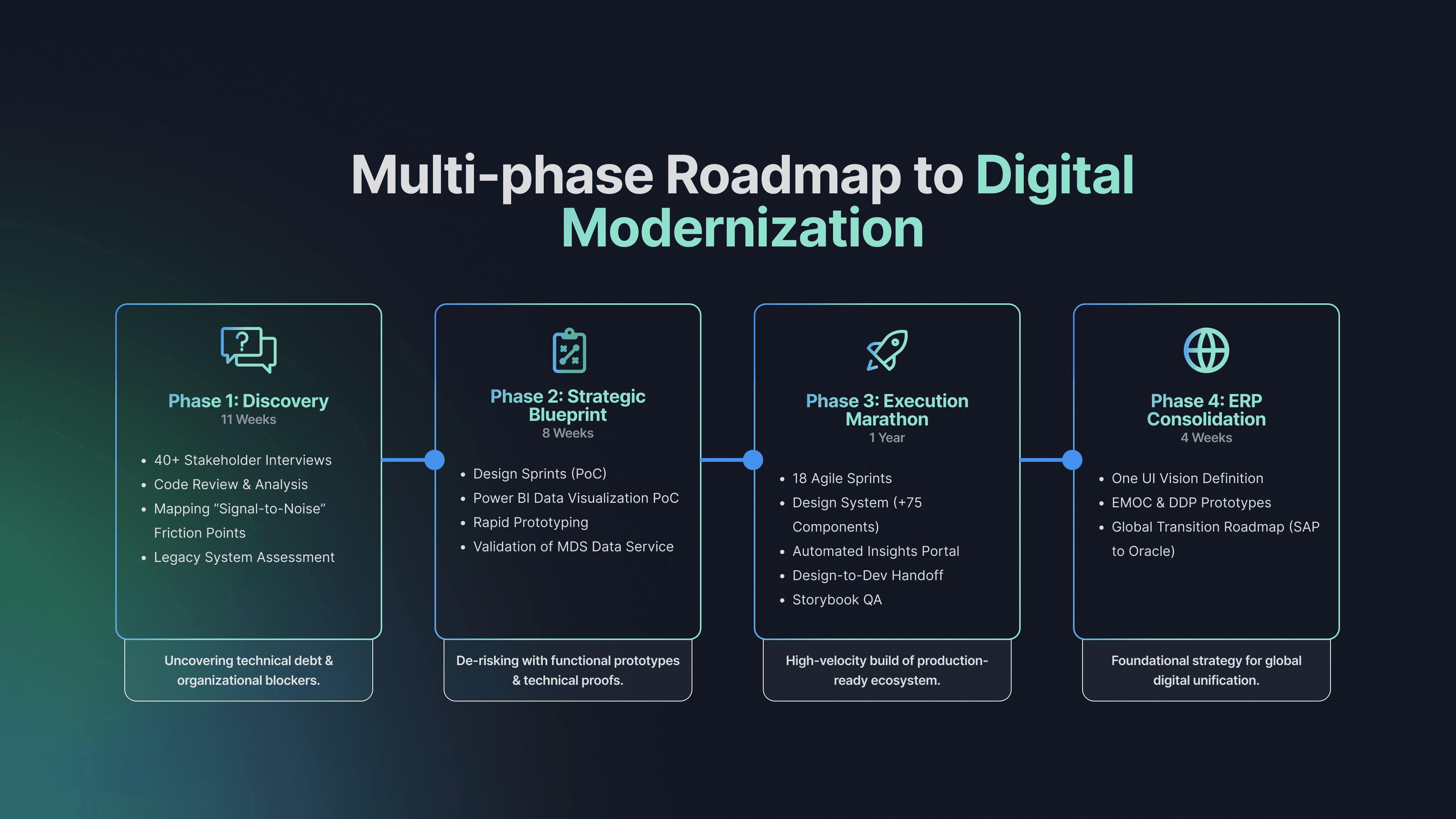
H&P operated with a loosely-coupled collection of technologies that had grown in complexity over decades, making it challenging for users to effectively monitor drilling operations. Performance Engineers were forced to spend half their time gathering data spread across siloed legacy tools (BGS, DrillDown, Saphira) just to create static reports.
We identified significant organizational and technical debt that hindered software delivery . Developers felt they were "running on sand" because they lacked a single source of truth for rig data. The challenge was to consolidate these capabilities into a unified platform without disrupting active, high-stakes drilling operations.
A Multi-phase DesignOps Framework
The Strategy
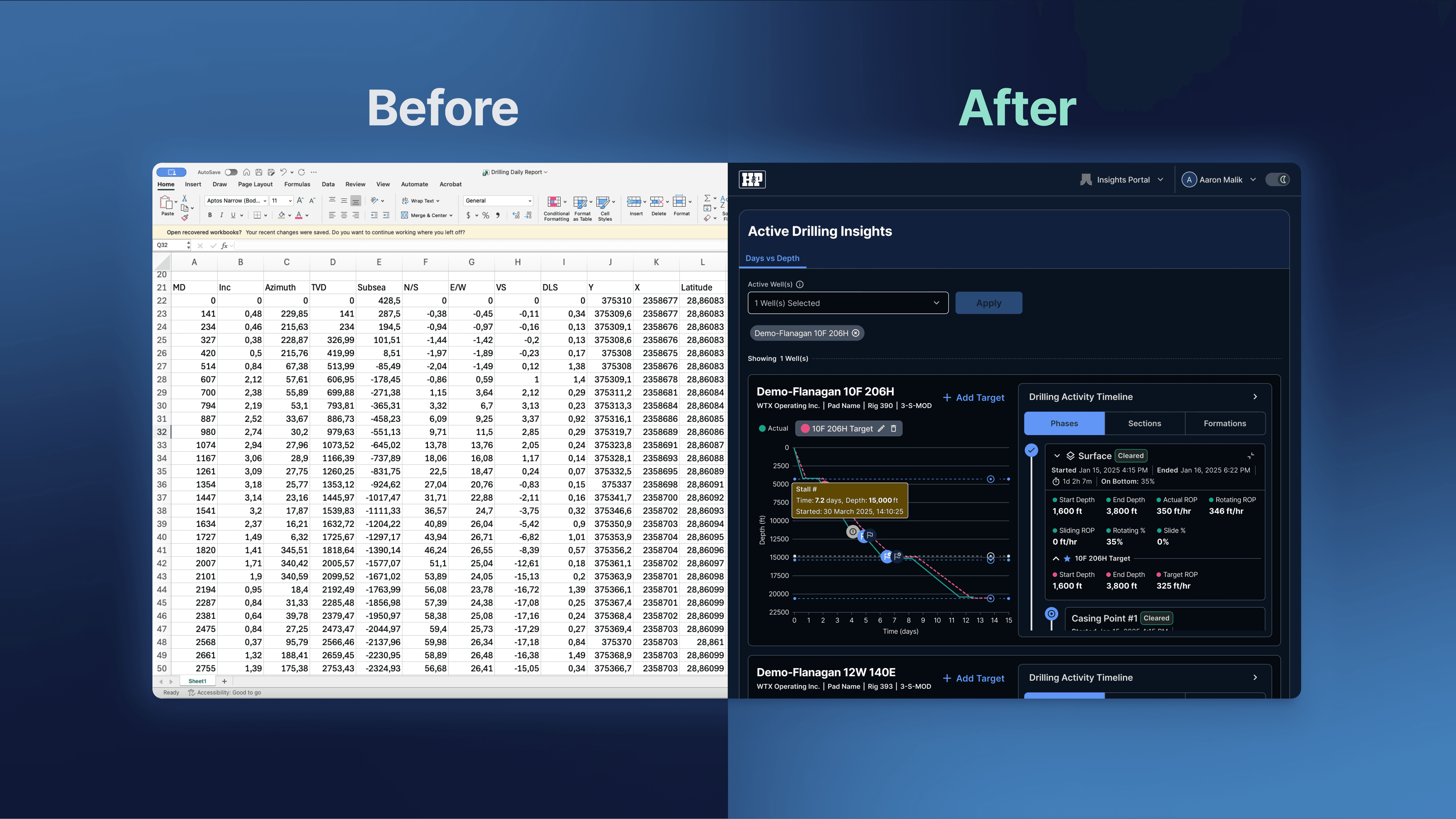
Our strategy involved moving from initial discovery to a global strategic vision across four distinct phases. To achieve this, we established a rigorous DesignOps process that ensured our team of four designers remained strategically aligned with engineering and business goals.
Multi-Phase Lifecycle: built on a Modular Intelligence framework, moving from initial chaos to systemic order across four distinct Statements of Work (SOWs).
Discovery (11 Weeks): 40+ stakeholder interviews and 4 code reviews to map the "Signal-to-Noise" friction points.
Strategic Blueprint (8 Weeks): We utilized Design Sprints to rapidly validate a functional PoC for the Report Builder and visualize MDS data through Power BI.
The Execution Marathon (1 Year): A high-velocity cycle of 18 Agile Sprints, maturing the team into a single unit capable of delivering complex features every two weeks.
One UI Discovery (4 Weeks): Culminated by defining the vision for H&P’s Global ERP Consolidation, unifying EMOC and DDP processes into a future-proof React application.
Collaborative "Buddy Mode": Designers paired with front-end developers to refine, QA, and release features, ensuring design was grounded in technical feasibility from day one.
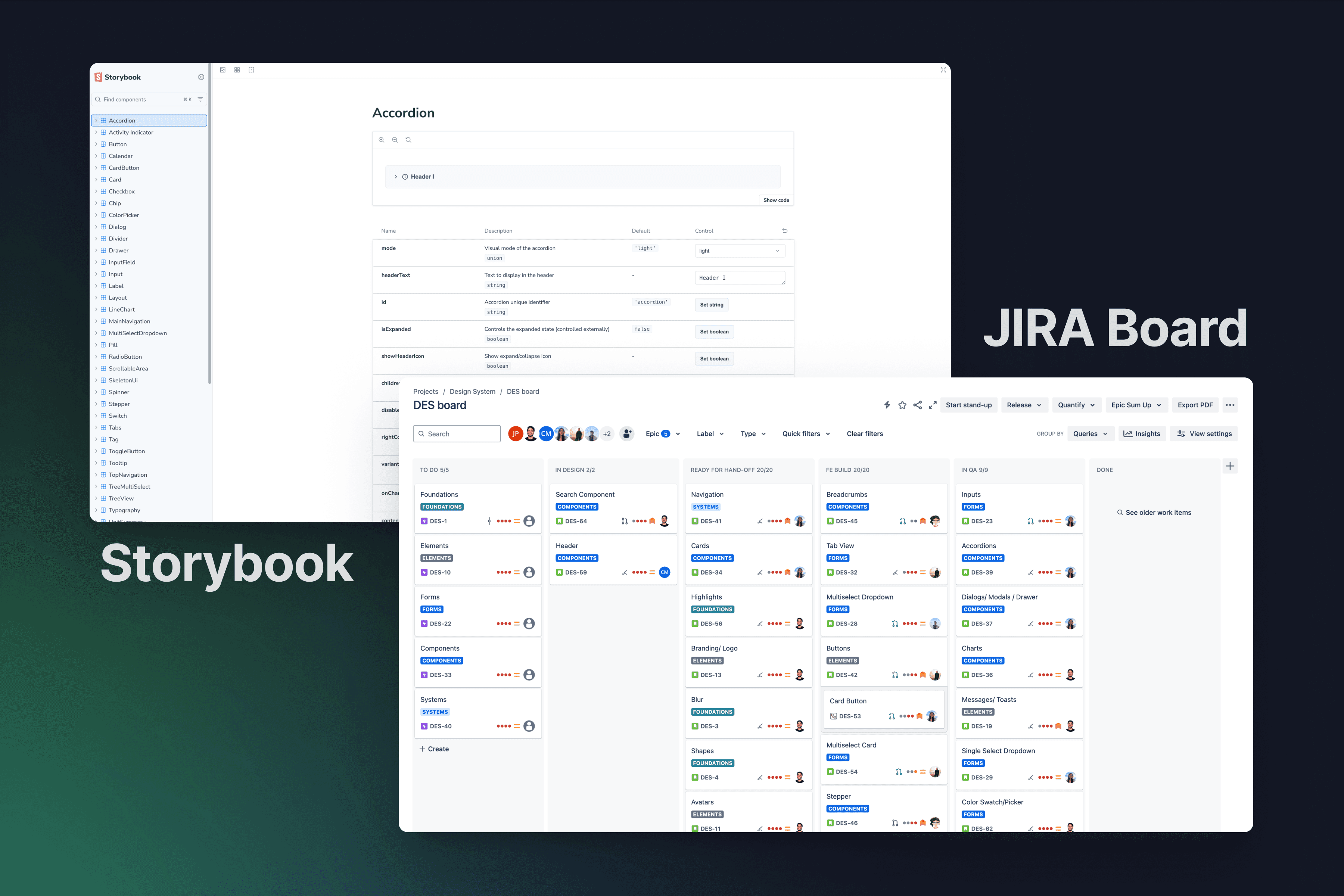
Agile Design Management: We implemented a dedicated Design System board in Jira, where designers tracked component updates and follow-ups within the same environment as the engineering team.
Engineering the No-Code Engine
The Build
The transformation was executed through rapid validation followed by deep technical execution across three primary pillars.
1. Strategic Blueprint: De-Risking through Rapid Validation
We dedicated this eight-week phase to solving the "Signal-to-Noise" friction by de-risking complex requirements through high-speed prototyping and technical proofs.
One-Week Design Sprints: Conducted intensive, 5-day sprints to tackle "Performance Engineer Efficiency". By moving from problem mapping to high-fidelity prototypes in a single week.
Recurring Report Builder: Validated a "Pick a Template" workflow with global filters and auto-masking of competitor data, allowing engineers to focus on operational improvements.
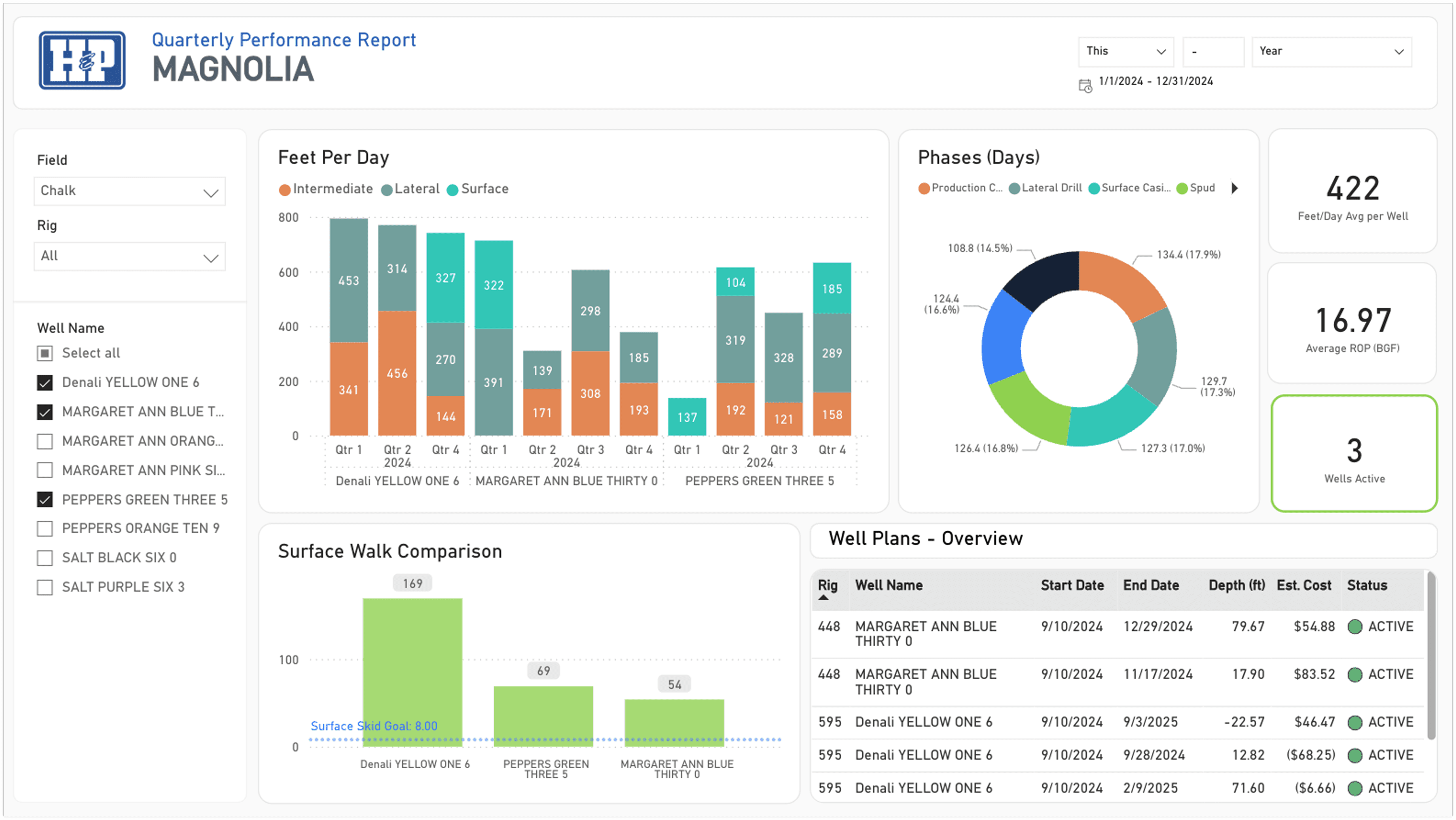
Power BI Data PoC: Simultaneously, engineered a technical PoC to verify Master Data Service (MDS) integration, designing a functional Power BI dashboard featuring real-time updates and customizable rig views.
2. The Scalable Design System
To support the "One UI" initiative, we built the H&P Design System (DES) as a multi-layered Single Source of Truth (SSOT).
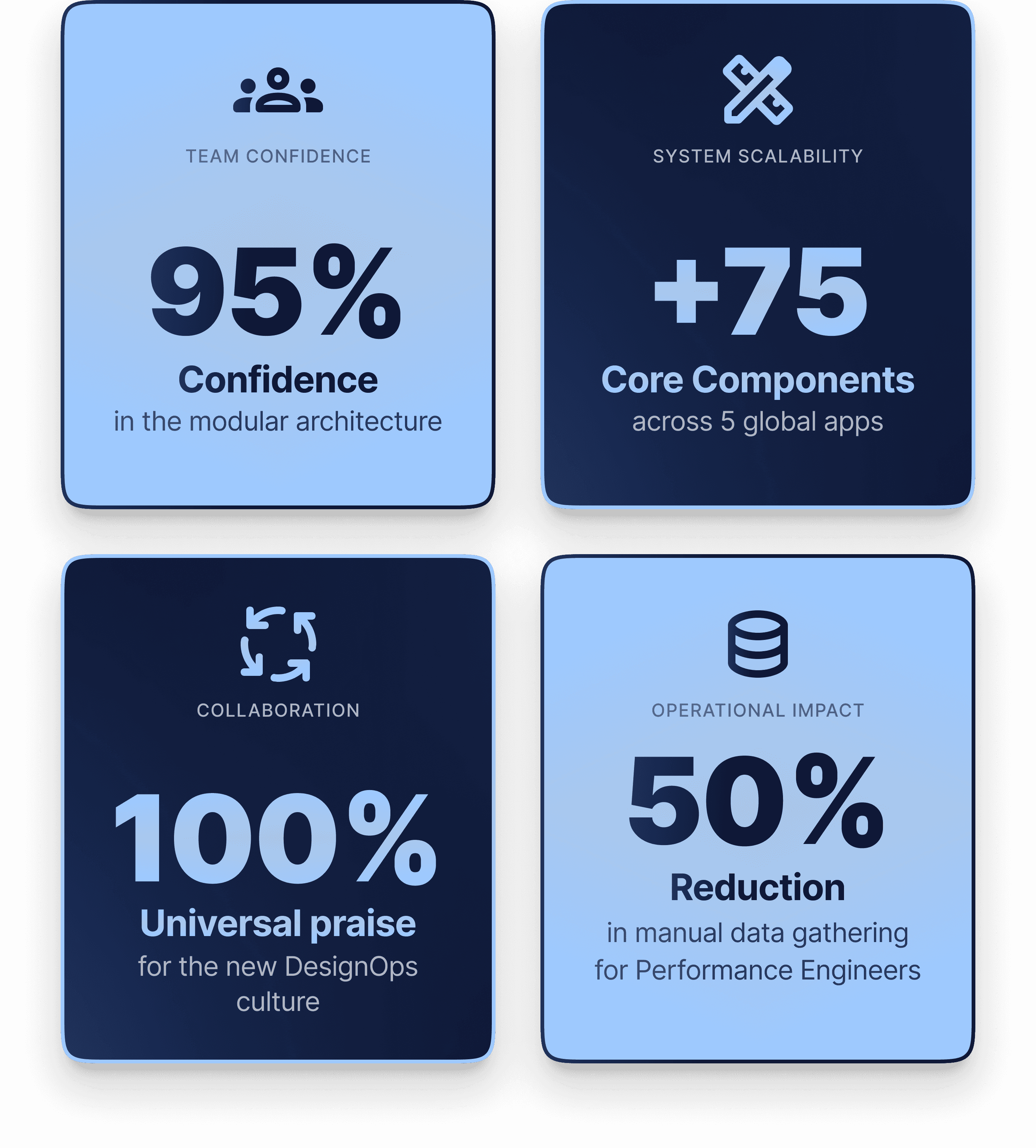
Systemic Metrics: As of July 2025, the system featured +75 core components and +2000 variant components powering 5 connected apps.
Variable-Driven Architecture: The system included primitive, semantic, and component variable collections in Figma. This structure enabled seamless switching between light and dark modes while maintaining strict brand integrity.
Technical Specifications: Every component story in Jira included a detailed description and best practices for implementation, providing clear interactions and specifications for developer handoff.
Design QA via Storybook: After components were assigned to development, we utilized Storybook as our component library. This served as the primary environment for Design QA, ensuring pixel-perfect execution and best-in-class interactions before production release.
3. The Automated Insights Portal
I led the design of the Automated Insights (AI) hub, a mission-critical platform designed to optimize drilling performance through a holistic view of well-specific data.
User Empowerment: We designed a centralized dashboard that consolidated data, insights, and documents, allowing Performance Engineers to log into significantly fewer places to start their day.
Complex Data Visualization: We engineered the Days vs. Depth (DvD) chart, an interactive telemetry component that allows users to define performance targets, search, and filter data directly within a reusable "Well Card".
4. Global Strategy (The One UI Initiative)
The engagement culminated in the vision for H&P’s global digital consolidation.
Modernizing the ERP Landscape: We defined the foundational vision for the "One UI" platform.
Designing Mission-Critical Workflows: Our team delivered wireframes for EMOC (Equipment Management of Change) and DDP (Deferral/Dispensation) to prevent rig shutdowns during audits.
Unified React Architecture: We proposed a modular architecture built with the H&P Foundation design system to handle global enterprise interactions.
A New Standard for Industrial Intelligence
The Impact
The 14-month modernization lifecycle successfully shifted H&P from a fragmented legacy state to a customer-obsessed digital culture. By delivering a unified architectural foundation, we provided a "living mirror" of H&P’s physical operations, empowering both internal teams and global customers.
1. Systemic & Technical Confidence
The move to a modular, variable-driven architecture provided the engineering team with the stability they previously lacked.
95% Technical Confidence: The vast majority of the team now feels fully capable of tackling future industrial challenges using the modular system we built.
85% Capable Alignment: Engineers and designers reported a significant increase in their ability to tackle complex future initiatives due to the standardized frameworks.
2. Operational Velocity & Efficiency
By automating manual tasks, we redirected hundreds of human hours toward high-value strategic work.
Drastic Reduction in Administrative Burden: The Recurring Report Builder and Automated Insights Portal eliminated the need for Performance Engineers to spend half their time gathering data for static presentations.
Mature Agile Delivery: By the end of phase 3, the team reached a level of maturity where they could complete at least one defined complex feature every 2-week sprint.
Design System Scalability: With 75 core components powering 5 connected apps, the speed of onboarding new developers and launching new features increased substantially.
3. Cultural Transformation
Perhaps the most significant impact was the shift in how H&P teams collaborate and perceive software development.
100% Universal Praise: The team reported universal satisfaction with the new collaborative culture, moving away from a "not our fault" mentality to a shared-ownership model.
Strategic Impact Alignment: 85% of the team felt their daily work was now clearly aligned with real, high-stakes business problems.
"This project has been completely counter to the standard culture here at H&P in the best way possible. We went from woes about software to pride in the work we've delivered." — Team Survey Feedback, 2025
Architecting for Industrial Scale
The Conclusion
The 14-month engagement with Helmerich & Payne serves as a landmark example of my ability to bridge high-level business strategy with rigorous technical execution. My role was to transform industrial data silos into a cohesive, high-performance ecosystem that evolved through four strategic phases.
A Multi-Phase Impact
My contributions spanned the entire product lifecycle, from initial validation to global deployment:
Rapid De-Risking: I delivered the functional Power BI Data PoC and co-designed the Recurring Report Builder through intensive design sprints, proving that complex telemetry could be automated for immediate efficiency gains.
Systemic Intelligence: As the Design Lead for the Automated Insights Portal, I architected interactive interaction models like the Days vs. Depth (DvD) chart, while simultaneously building a variable-driven Design System that enabled light/dark mode switching and agile component management via Jira and Storybook.
Global Vision: I established the foundational vision for the "One UI" platform, delivering the high-fidelity user flows, mockups, and prototypes for EMOC and DDP that will drive H&P's April 2026 global transition to Oracle.
Moving Beyond Pixels
This project reinforces my core mission: moving beyond "just designing screens" to engineer modular digital foundations. By delivering a 95% technical confidence boost to the team and establishing a pixel-perfect DesignOps culture, We helped H&P move from fragmented tools to a scalable, future-proof command center.